
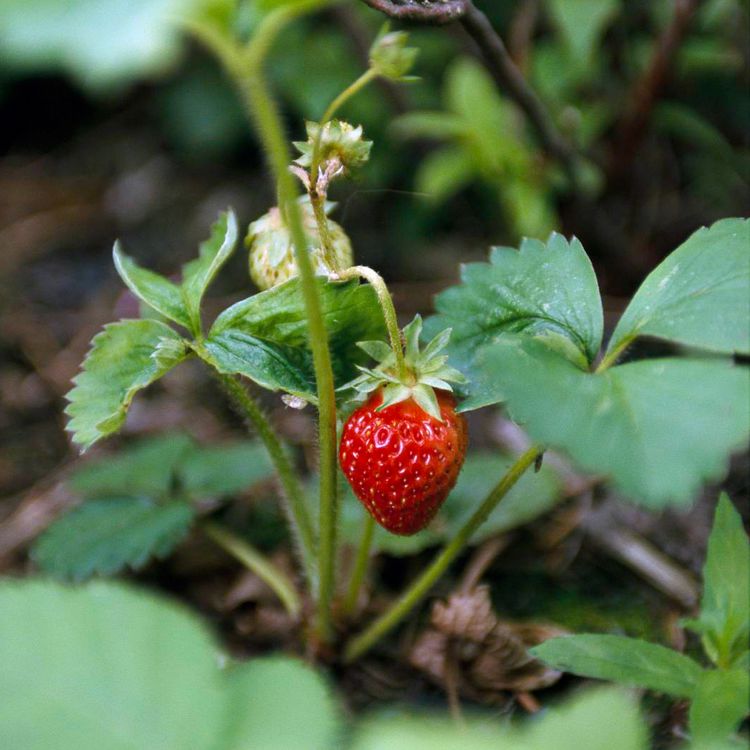
Growing strawberries from seed? Yes, it's possible! A strawberry patch is usually started from young plants or dormant root clumps, but you can grow delightful berries from seed too. Seed-started plants typically bear smaller fruit than hybrid varieties that are available exclusively as plants. For a fraction of the cost of a single hybrid strawberry plant, you can purchase a packet of seeds and plant a generous berry patch that will produce plenty of sweet, juicy fruit. Cost savings aside, growing your own strawberries from seed is simply fun. It all starts with watching for tiny leaves to emerge from the soil and quickly multiply.
Strawberries started from seed are usually alpine strawberries or close cousins to alpines. These plants produce petite berries (the fruit is about an inch long) in spring and summer. When the berries are ripe, their intense perfume wafts through the garden conjuring up thoughts of strawberry jam. However, alpine strawberries produce a small number of berries per plant; count on a packet of seeds to produce berries for fresh eating but not enough to make jam.
Fruit purchased at the grocery store, along with many varieties available as plants at garden centers, are hybrid strawberries. Hybrid berries are developed by plant breeders crossbreeding plants over many years. Researchers select hybrids based on their fruit size and quality along with the ease of growing. Hybrid strawberries don’t reliably reproduce by seed. They are grown from transplants.
How to Grow Strawberries from Seeds
Strawberry seed is tiny. The small seed requires special care at planting time. Get a good start and build a productive berry patch by following these 5 steps for growing strawberries from seed.
1. Start Seeds Indoors
Alpine strawberries will produce fruit the first summer after planting if the seeds are started indoors about 8 weeks before the last frost. Sow the tiny seeds in a seed-starting flat or shallow container filled with fine seed starting mix. Sprinkle the seeds on top of the starting mix. Barely cover the seeds with soil; they need light to germinate. Mist the soil daily to keep it moist but not wet. Be careful not to water too intensely; too much water will disturb the seeds, pushing them down into the soil where they will not be able to germinate.
Provide a strong light source above the seeded flat. A grow light or a shop light positioned about 6 inches above the flat will help seeds germinate. Maintain a moderate air temperature around the flat. Strawberry seeds germinate best at 65 to 70℉. Alpine strawberries can also be seeded directly in the garden after the last frost.
2. Let Seeds Germinate
Strawberry seeds are slow to germinate. Expect to wait at least 14 days to as long as 45 days for tiny leaves to pop out of the soil. Continue to mist the soil, not allowing it to dry out, and providing plenty of light as you wait. The long germination time adds to the importance of planting seeds at least 8 weeks before the last frost in spring to ensure berries are produced the first year.
3. Prepare Seedlings to Be Planted
Help berry seedlings transition from consistently warm indoor growing conditions to more unpredictable outdoor weather by making the move slowly. When seedlings have multiple sets of leaves and are at least 3 inches tall, acclimate them to outdoor growing conditions by setting seedlings outside for several hours each day and bringing them inside at night. After seedlings are acclimated to the outdoors for a week or so, they are ready to be planted in the garden.
4. Plant in Landscape Beds or Containers
Alpine strawberries are great low-growing edging plants. Plant them at the front of a perennial border or landscape bed to create a neat and tidy edge. The plants’ green foliage looks good from spring until frost and berries are a cinch to harvest at the front of the bed. Alpine strawberries grow well in containers of all types. They will flower and fruit when they receive at least 6 hours of bright sunlight a day. The more sunlight they receive, the more fruit they will produce.
Alpine strawberries grow in clumps 6 to 8 inches across and about 6 inches tall. Unlike traditional strawberries, they do not produce runners and spread to form colonies. Plant transplants 8 inches or so apart to create a dense, groundcover-style planting.
5. Remember to Water
Regular moisture is key to good berry production. Your strawberry plants need about 1 inch of water a week. Supplement rainfall with hand-watering as needed to reach this amount. Before watering, check the soil moisture. If the top inch is moist, don’t water and check the soil again in a few days. Clay soil will retain water longer than fast-draining sandy soil.