
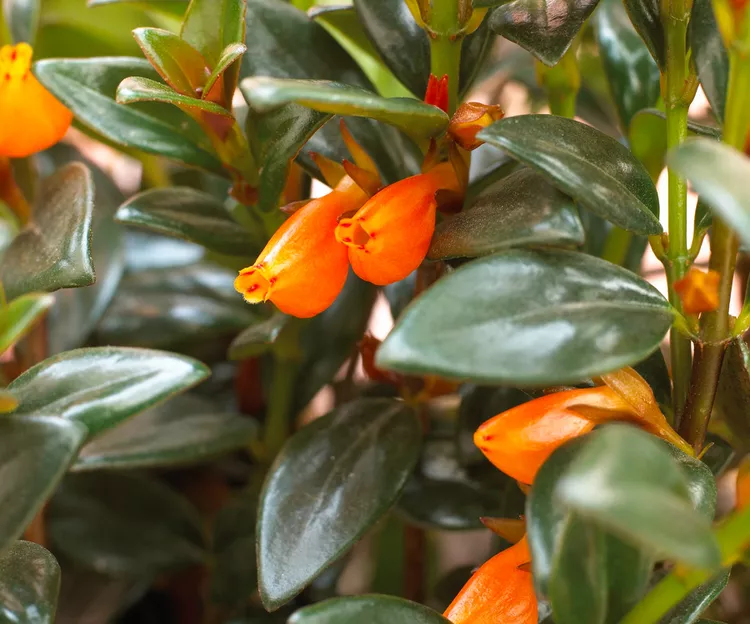
Adding a goldfish plant to your collection of houseplants is easier than you might think. These tropical plants bloom in hues of bright oranges and fiery reds with beautiful trailing forms. Their glossy, thick, almost succulent-type leaves are deep green and paired evenly down long stems. Goldfish plants of the genus Nematanthus or Columnea are evergreen perennials from Central and South America that make lovely hanging baskets and add a splash of color to any room.
Goldfish Plant Overview
| Genus Name | Nematanthus gregarius or Columnea gloriosa |
| Common Name | Goldfish Plant |
| Additional Common Names | Flying goldfish plant, Clog plant |
| Plant Type | Houseplant |
| Light | Part Sun |
| Height | 1 to 2 Feet |
| Width | 2 to 3 Feet |
| Flower Color | Orange, Red |
| Foliage Color | Blue/Green |
| Zones | 10, 11 |
| Propagation | Stem Cuttings |
How to Plant and Care for Goldfish Plant
Goldfish plants are easy to care for and look best when planted in hanging baskets or allowed to spill over the sides of their containers. While typically grown as houseplants, goldfish plants can be set outside during the warmer months or grown outdoors in USDA Hardiness Zones 10 and 11. Although evergreen, they may go dormant during the winter months. Take care to avoid overwatering.
Goldfish Plant Care Tips
Whether your goldfish plant is from the genus Nematanthus or Columnea, the care is the same.
Light
Goldfish plants enjoy bright but indirect light. They won’t appreciate a location in full sunshine. Choose a brightly lit area a few feet from a window, a north- or east-facing window, or use a supplemental grow light to brighten up their location.
Soil and Water
High-quality potting soil or succulent soil works for goldfish plants, but they must have good drainage. Adding a handful of perlite and mixing it in will help keep the soil well-drained and loose. Slightly acidic pH soil is best.
Goldfish plants should be allowed to dry out somewhat between waterings. They like their moisture but shouldn’t be kept in continuously damp conditions. Use your finger to test the top inch of soil and water when it feels dry.
Salts from fertilizers and water impurities can build up in houseplant container soil, eventually damaging the plant. Flush the soil with water once or twice annually by setting the pot in the sink and slowly running water into it until it drains clear from the drainage holes. Leave the pot in the sink for a few hours to avoid having a drippy mess on your floor.
Temperature and Humidity
Goldfish plants are tropical and enjoy high humidity levels. When indoor humidity levels drop in winter, add a small humidifier to raise the moisture level near the plant and group other moisture-loving plants nearby.
Average room temperatures are acceptable for goldfish plants. If you hang them outside during the summer, watch the forecast and bring them in when the nights are cold. Also, keep them out of hot afternoon sun.
Fertilizer
Fertilize goldfish plants every two to four weeks with a diluted general-purpose fertilizer when watering. Follow the directions on the label. Discontinue fertilizing during the winter months when the plant may become dormant.
Pruning
Prune goldfish plants to remove excessively long, leggy stems and broken or damaged pieces. Aesthetic pruning should be done during late winter.
Potting and Repotting Goldfish Plant
Goldfish plants enjoy being slightly root-bound and only need repotting every few years. If growth has stopped or the plant needs watering every two to three days, you may need to repot.
Choose a pot or basket only one size larger than it currently occupies. Pay attention to drainage, and use fresh potting soil or succulent mix.
Pests and Problems
Goldfish plants kept indoors are susceptible to the same pests that bother other houseplants, namely aphids and spider mites, as well as a few fungal diseases. Aphids are usually easy to spot, but tiny spider mites may first be detected by their fine webbing and stippling on leaves from their feeding. Wash both these pests off outside or use an insecticidal soap. Prevent fungal diseases by not overwatering your goldfish plants.
How to Propagate Goldfish Plant
Goldfish plants are easily propagated by taking stem cuttings and can be rooted in either soil or water. Start by sanitizing the knife, scissors, or shears you will use to take cuttings. Take 3-5 inch cuttings from a stem tip. Choose stems with no flower buds that are still pliable, not woody.
Rooting goldfish plant cuttings in soil:
- Prepare containers with a mix of coir and perlite to ensure good drainage and a light, airy texture. Any container will do as long as drainage is adequate.
- Remove the bottom pair or two pairs of leaves from the stem, but try not to damage the node where the leaf is attached.
- If desired, dip the stems in rooting hormone. This step isn’t necessary for goldfish plants but can speed rooting.
- Use a pencil to make holes in the planting medium, and stick the cuttings. Firm up the mix around the cuttings.
- Water thoroughly, and cover with a humidity dome or plastic bag. Take care that the leaves don’t contact the plastic.
Rooting goldfish plant cuttings in water:
- Take cuttings as described above.
- Add a few inches of water to a clean vase or other container. If your tap water is treated with chlorine, let it sit on the counter for 24 hours first for the chemical to dissipate.
- Remove any leaves that would be submerged in the water.
- Place the cuttings in the water and leave the container in an area with bright but indirect light.
- Change the water every three or four days.
- When new roots are an inch long, transplant the cuttings to a moist potting mix in individual containers.
Types of Goldfish Plant
Columnea gloriosa
Columnea gloriosa is a gorgeous trailing houseplant. This goldfish plant can put on quite a show with red-orange blossoms that resemble small goldfish hiding among the leaves.
‘Black Gold’
Nematanthus ‘Black Gold’ is a hybrid with bright orange flowers that look like their namesake snack. It has shiny dark green leaves with red highlights on the undersides.
‘Christmas Holly’
Nematanthus ‘Christmas Holly’ is a hybrid similar to ‘Black Gold’ but with a redder hue to the blossoms. It makes a stunning hanging basket display.