
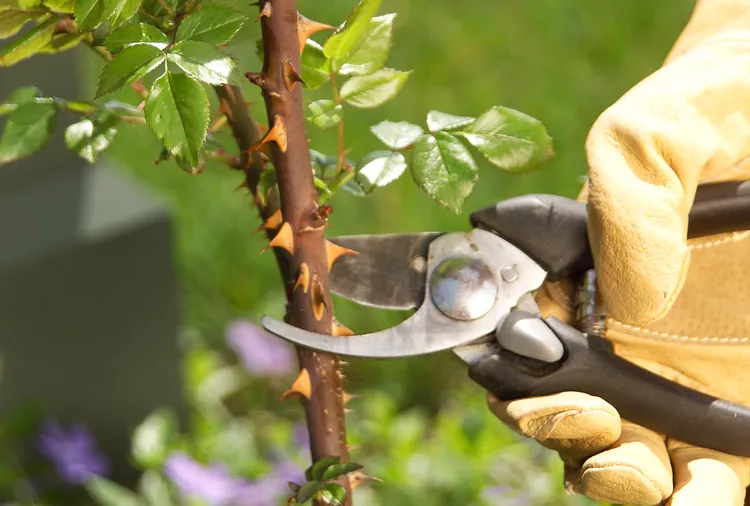
Pruning shears are essential tools for maintaining a garden. And knowing how to clean pruning shears is a very important part of preventing the spread of pests and diseases from plant to plant. The key is to regularly disinfect your garden pruners and other tools, even when plants you're trimming appear healthy. This guide covers everything you need to know about when and how to disinfect pruning shears (and other garden tools) with four simple methods that use items you likely already have around your house.
Why Clean Pruning Shears?
Cleaning pruning shears and other garden tools from time to time helps these items last longer and keeps rust and debris from building up. More than that, cleaning and disinfecting garden tools help prevent the spread of many common plant pests and diseases, including:
- Spider mites
- Powdery mildew
- Downy mildew
- Blight
- Damping-off
When to Disinfect Pruning Shears
Any tool that comes in direct contact with garden plants should be disinfected regularly. That includes pruning tools such as garden shears, trimmers, clippers, scissors, snips, and loppers.
How often your tools need to be cleaned depends on how you use the tools and whether there are apparent plant diseases and pests in your garden. It’s a good gardening practice to disinfect all garden implements at least once a year, either in spring or fall. However, if your plants are struggling with an active infection or infestation, you should disinfect your tools more often.
For example, if your plants show signs of powdery mildew and you decide to prune away infected leaves, you need to disinfect your pruning tools in between each plant in your garden.
Products to Avoid for Cleaning Garden Tools
While it can be tempting to use standard household cleaners, like Lysol or Listerine, on your garden tools, there is no scientific evidence to prove that these products work on plant pathogens, and these cleaning products may corrode garden tools. Distilled vinegar isn't recommended for garden tool sterilization because it isn’t strong enough to thoroughly sanitize gardening implements. Baking soda also isn't a good solution. It is a salt that can alter the soil pH, and it doesn't kill fungi.
4 Effective Ways to Clean Pruning Shears
When you’re ready to disinfect your pruning shears, first clean them thoroughly, especially if they’ve been sitting for a while. Using water, detergent, and a good scrub brush, scrape away any dirt or rust on your garden shears and other pruning tools. This makes it much easier to sanitize your tools later.
While there are certainly some household cleaning products that shouldn’t be used on gardening items, these four sterilization methods have all proven effective against damping-off, fungi, and other plant pathogens.
1. Rubbing Alcohol
Rubbing alcohol is readily available at most grocery stores and pharmacies, and it’s the most efficient and budget-friendly way to clean and disinfect garden tools. Just make sure the product you use is at least 70% isopropyl or rubbing alcohol.
The beauty of using rubbing alcohol on garden tools is that this product works much faster than other methods. If you need to disinfect garden pruners or other pruning tools between plants, rubbing alcohol is one of the easiest and safest products you can reach for.
Rubbing alcohol can be applied with a spray bottle or wiped over garden tools with a damp cloth. After applying, wait 30 seconds, or let it dry completely, and the tools will be sterilized and ready to go.
2. Bleach
Bleach is another super effective way to disinfect pruning shears, but it doesn’t work as quickly as rubbing alcohol. To use bleach for disinfecting garden tools, mix 1 part bleach with 9 parts water to create a 10% bleach solution. Then, soak the tools in the mixture for 30 minutes, remove them from the bleach mixture, and allow them to air dry.
Because bleach takes longer to work, it’s not as useful as rubbing alcohol for disinfecting garden tools on the go. However, if you want to clean items in bulk or you need to disinfect large items, such as seed starting trays or trowels, bleach is often the best and most budget-friendly option.
Whenever you use bleach, wear gloves to avoid skin damage and NEVER mix bleach with other cleaning products.
3. Hydrogen Peroxide
Like bleach, hydrogen peroxide takes some time to work, but it can be another useful cleaning product in your gardening arsenal. If you want to work with hydrogen peroxide, look for a 3% solution, which is commonly sold at pharmacies and grocery stores.
Hydrogen peroxide is commonly sprayed on reusable seed-starting trays to help prevent damping-off. However, this product can also be sprayed or wiped onto tomato cages, terra-cotta plant pots, and gardening hand tools. Gardening items can also soak in hydrogen peroxide, but bleach is usually a more budget-friendly way to soak garden tools.
Hydrogen peroxide takes about 5 to 10 minutes to disinfect items, so it doesn’t work as well for cleaning pruning shears in between plants. However, if you need to clean your pruners at the end of the day or the end of the growing season, hydrogen peroxide works perfectly well.
4. Heat
Most people know that heat can disinfect, so it’s no surprise that heat can be a useful way to sanitize pruning shears and other garden tools. However, heat may not be the most practical method to use on larger gardening gear, and it shouldn’t be used on tools that contain plastic, because these items can melt at high temperatures.
Boiling, steaming, or baking gardening tools at 180°F to 200°F for about 30 minutes kills off most plant pathogens, but the tools must be small enough to fit on your stovetop or in your oven. This method works best for small objects, like metal plant labels, metal pruning shears, or small terra-cotta pots. Don’t forget to use hand protection when picking up these items after being heat treated; they will be hot.