
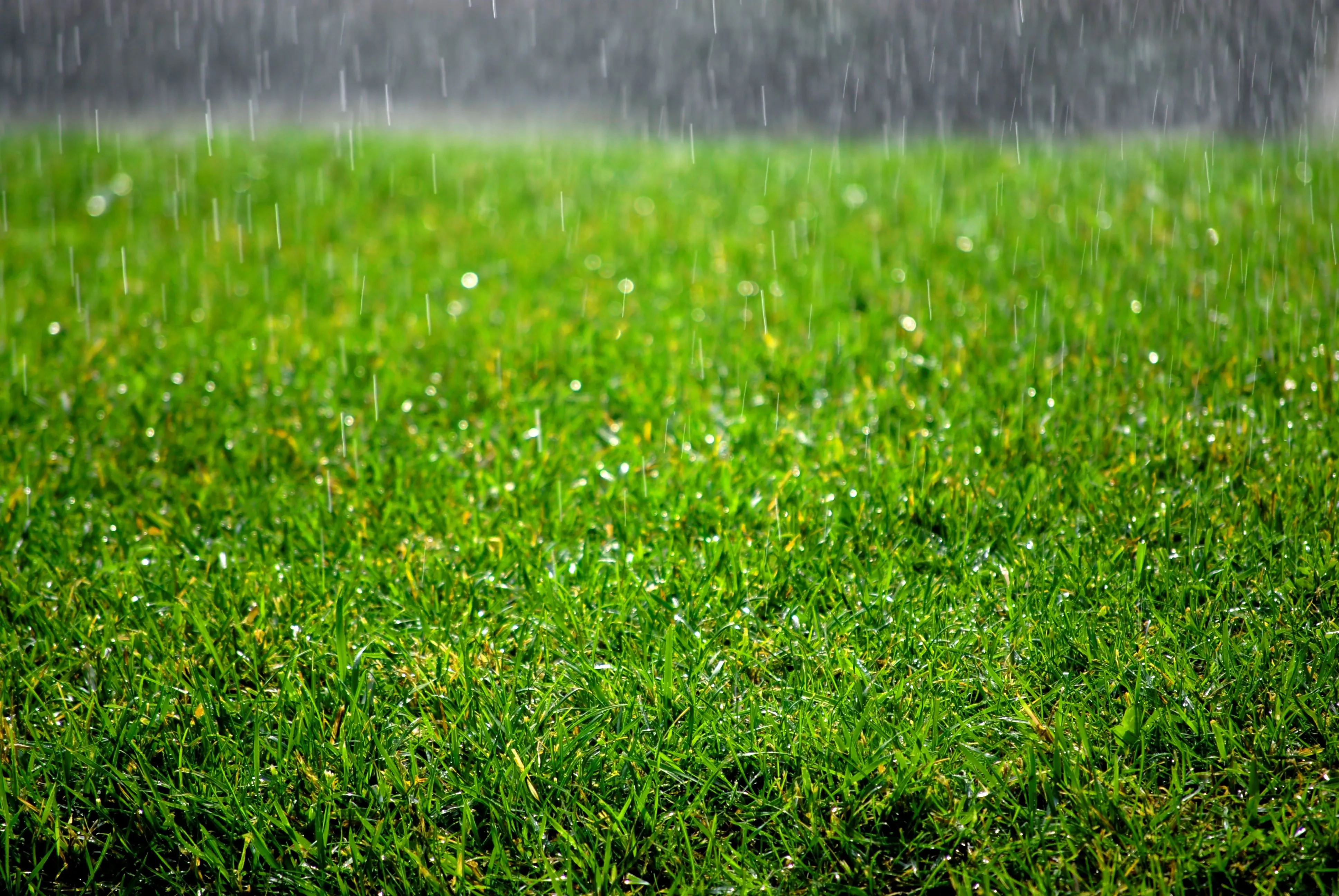
- Avoid mowing, aerating, or starting lawn renovations immediately after rain, as wet soil compacts easily.
- Wait 2–3 days after rain for soil to dry before tasks like seeding, aerating, or laying sod to avoid compaction.
- Use rainy days to assess lawn health, identify drainage issues, and develop a fertilization and aeration schedule.
Working on your lawn right after a rain is often more detrimental than beneficial. All lawn care involves foot traffic and often also the use of heavy equipment, such as a lawn mower, which compacts a wet lawn. Also, if disease is present, it spreads in the moist, warm environment that is common after a rain. Even if the leaf blades are dry, the soil below might be soggy from a heavy rain.
Here are the top 4 lawn care tasks you should delay for a day or two after it rains, plus 2 that you can do immediately.
Lawn Care Tasks to Avoid After a Rain
A rainy day is a valid reason for putting off the following lawn care tasks.
1. Mowing
If the grass is wet, leave your mower parked in the garage. Wet grass clippings cling to mower blades, preventing the mower from evenly distributing them over the turf surface. Instead, the mower leaves behind clumps of soggy clippings. In time, the concentrated clippings can smother patches of turf and create an unsightly lawn.
Mowing a wet lawn can lead to scalping and an overall rough cut. Wet grass blades tend to stick together, rarely standing erect for the mower blades to make a clean cut. The result is an uneven lawn surface and raggedly cut grass blades, which are more susceptible to disease.
Mowing wet grass is also dangerous. Wet grass is slippery, and the accompanying soggy ground can be slick too, especially on slopes. In these tough conditions, it is easy to fall or lose control of a mower. Mow when the grass is dry, and the lawn surface is solid.
2. Aerating
Aerating right after a rain is a recipe for frustration. A lawn aerator works by plunging probes into the top 2 to 4 inches of soil and removing plugs of soil that then break down on the lawn surface. Aerating an excessively wet lawn causes the soil to cling to the probes, creating a sticky mess.
It is best to aerate a moist but not wet lawn. Plan to aerate the turf two to three days after a measurable rain. The lawn aerator will easily sink probes into the soil, and the extracted soil plugs will freely dislodge.
Related
3. Starting a Lawn Renovation Project
Delay removing turf, filling low spots, and laying sod after a measurable rain. Most lawn renovation projects involve foot traffic and some heavy equipment. Traffic of any sort—from foot traffic to lawn tractors—will cause soil compaction. Soil is especially prone to compaction right after a rain. Heavy equipment and excess foot traffic push the soil particles together in a way that causes once-loose soil to take on an almost concrete-like texture. Compacted soil severely limits plant growth.
Wait at least a couple of days after a rainstorm to tackle a lawn renovation project. The soil surface should be firm, and the soil in the root zone should no longer be sticky or excessively moist. When in doubt, delay another day. Once the soil is compacted, it is difficult to remedy.
4. Sowing Grass Seed
A wet soil surface is not ideal for seed germination. Turfgrass seed germinates best when it is broadcast over dry or slightly moist soil. After the seed is broadcast, the soil is gently raked so that only 10 to 15 percent of the grass seed is visible.
Finally, a roller is pulled over the area to ensure good seed-to-soil contact. Rain-soaked soil makes these seeding steps nearly impossible. Allow soil to dry for several days after a measurable rain before seeding.
Lawn Care Tasks to Do After a Rain
When the soil is soggy but you’re eager to make progress in caring for your lawn, tackle these tasks that are perfect for a rainy day. Remember to minimize soil compaction and limit heavy equipment use on wet soil.
1. Check for Drainage Issues
The hours right after a heavy rain are a great time to assess where water pools on your lawn. If water stands in an area for more than 12 hours, consider installing a rain garden instead of trying to coax grass to grow there. If there are small depressions that drain slowly, make note of them and plan to fill the low spots with quality topsoil and reseed after the soil dries.
2. Make Fertilizer and Aeration Plans
Use a rainy day to assess your lawn’s health. Look for areas that show weak growth and thin coverage. Research the causes of poor growth and then implement plans to improve the growing conditions. Developing a regular fertilization schedule and aeration plan might be helpful.
- <span>Gardening</span>
- <span>Caring for Your Yard</span>
- <span>Lawn Care</span>