
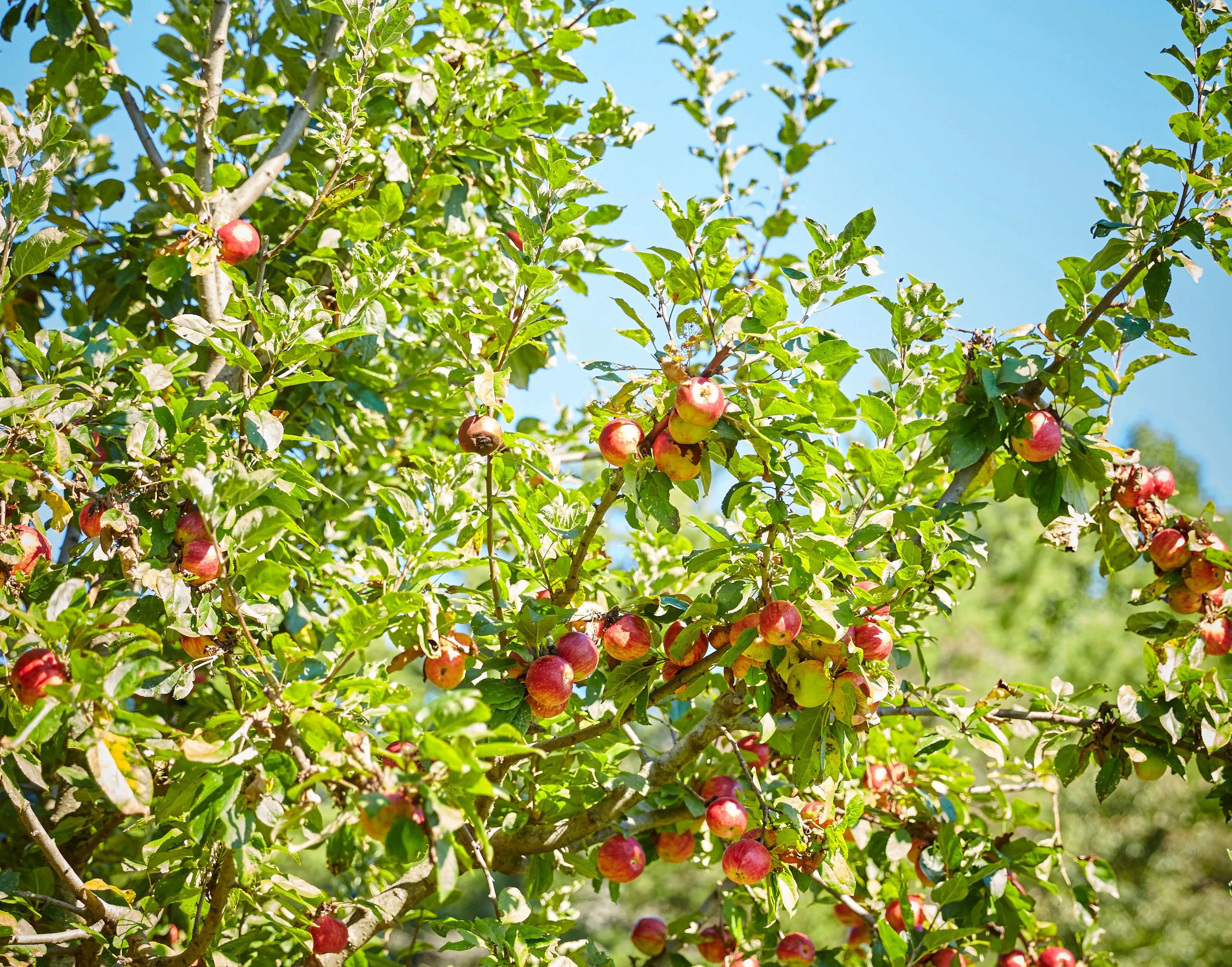
- Fall is ideal for planting fruit trees, as it allows roots to establish before winter; plant 6 weeks before the first frost.
- Select cold-hardy apple, pear, cherry, and peach varieties, planting compatible pairs of non-self-pollinating trees.
- Water deeply until the ground freezes, and add companion plants to boost pollination, repel pests, and suppress weeds.
While spring is generally considered the ideal planting time for fruit trees, if you didn’t get around to it then, you’ll get another chance this fall. Planting fruit trees in the fall is particularly beneficial in the South, where the cooler weather and more frequent rainfall of autumn help trees settle in faster. However, fruit trees can be planted in the fall in cooler northern gardens too, as long as you get them in the ground about six weeks before your area’s first hard frost; this allows their roots to get established before the ground freezes.
Get your backyard orchard started now by choosing from the following popular types of fruit trees that you can plant in autumn. You’ll also find essential panting tips to help your trees establish successfully.
1. Apples
Apple trees are one of the most cold-hardy fruit trees, so it makes sense that they adapt well to fall planting. Just be sure to select an apple tree with a rootstock that’s winter hardy in your area, and plant at least two to three compatible apple trees close to each other, because many apple varieties are not self-pollinating. If you live in a cold region, look for cold-hardy varieties such as ‘Honeycrisp’, ‘Cortland’, and ‘Antonovka’, which handle winter weather like champs.
2. Pears
Most pears aren’t self-pollinating, which means you’ll need to plant at least two compatible pear tree varieties for successful pollination and a good fruit set. Most cold-hardy pear tree varieties are grafted onto winter-hardy seedling rootstocks, and they result in standard-size fruit trees reaching 25 to 40 feet in height. For smaller trees, select winter-hardy varieties on dwarfing rootstocks.
Though pears take at least three years and up to ten years to fruit, the advantage over apple trees is that they are not bothered by as many pests and diseases.
3. Cherries
Cherry trees, just like pears, are relatively fast-growing fruit trees. Planting cherry trees in the fall is considered the best time in milder climates because that way, the tree focuses on root growth during the winter, which gives it a stronger start in the spring. Depending on the size of the tree you’ve planted, you might even be able to harvest a few cherries as early as next summer.
Both tart and sweet cherry trees are readily available for home growers. Tart cherry trees typically grow faster and are usually self-fruitful. Sweet cherries, on the other hand, take a little longer to mature and need to be grown in compatible pairs to bear fruit.
4. Peaches
Peach trees aren’t quite as cold-hardy as some other fruit trees, but they can be planted in autumn as long as you choose a winter-hardy variety and add a thick layer of mulch after planting.
If you’re interested in canning and home-preserving, look for freestone varieties of peaches, which have pits that come away from the fruit easily. Varieties like ‘Redhaven’, ‘Belle of Georgia’, and ‘Contender’ are all popular for canning, but they’re delicious for fresh eating. too.
Related
5. Other Stone Fruit
Apricots, plums, and nectarines are also suitable for fall planting. They have many of the same care requirements, although plum trees are less likely to be self-pollinating. If you want to increase fruit set in any or all of these trees, grow them in compatible pairs to increase pollination rates and consider leaving some space beneath your trees so you can create a guild and add companion plants later on. Many perennial and annual flowers, as well as berry bushes and some herbs, make fantastic fruit tree companion plants that attract pollinators, repel pests, and suppress weed growth.
6. Persimmons
If you have a flair for the unusual, persimmons are a less common fruit but equally tasty. Persimmon trees grow well in small gardens and orchards; they can be planted in spring or fall. Asian persimmon varieties like ‘Fuyu’ are not as cold-hardy as American persimmons (Diospyros virginiana), which can grow as low as Zone 4. These native trees grow wild throughout the eastern and central United States and tolerate partial shade where other fruit trees struggle.
7. Pawpaws
Another native plant option, pawpaw trees are found throughout eastern North America, with a geographic range that stretches from Canada to Florida. Not as common as other fruit varieties, pawpaws have a sweet flavor that tastes like a mixture of mango and banana, and a custard-like texture that’s truly one-of-a-kind. Tolerant of sun or light shade, pawpaws are flexible about their growing needs, and they do just fine with fall or spring planting.
Pawpaw trees are self-infertile, and to produce fruit, you need to plant two genetically different trees close to each other; both pawpaws grown from seed and two different grafted varieties fulfill that requirement.
Tips for Planting Fruit Trees in Fall
Choosing fruit trees that are suitable for your growing area is key to avoiding winter damage. Following these easy planting tips will further winter-proof your trees and ensure they survive until spring:
- Carefully inspect trees. While bare-root fruit trees are available in winter and early spring, you’ll probably only be able to get potted fruit trees when fall planting. Potted fruit trees may be root-bound and possibly harbor invasives, such as jumping worms. Make sure to thoroughly check the potted trees and the soil before purchasing and planting.
- Water well. After planting fruit trees, water them deeply, and keep them well-watered until the ground freezes. New plantings will need to be watered regularly during the first year of growth. After that, you can reduce watering.
- Add mulch. Applying a 3-inch layer of mulch around new fruit trees insulates roots from the cold and helps the soil retain water better. Just remember to keep mulch a few inches away from tree trunks to avoid pest issues and rot.
- Install tree guards. Deer, rabbits, voles, and other critters are more likely to strip tree bark in winter when other food sources are scarce. To prevent damage, install tree guards or wire cages around the base of young trees after planting and leave them on for five to seven years, until the trees have a thick bark.
- <span>Gardening</span>
- <span>Edible Gardening</span>
- <span>Growing Fruit</span>