
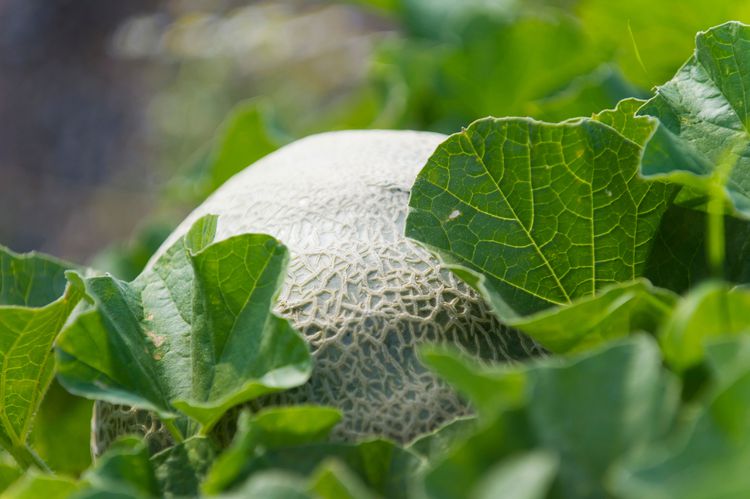
When choosing companion plants for cantaloupes and other melons, flowers and flowering herbs are among the best options. Flowering plants attract beneficial insects that prey on melon pests, and flowers filled with sweet nectar also draw in pollinators that ensure the cantaloupe flowers are pollinated to produce lots of fruit. Here are 9 of the best flowers and other cantaloupe companion plants for attracting pollinators and producing big yields of cantaloupes.
Alliums
Garlic, onions, chives, and other allium plants are well-known for their sulfur-like aroma, which deters a wide range of pests. If you let chives and other alliums flower, the blooms entice pollinators to visit your garden and pollinate cantaloupe flowers. To keep pests from intruding in your vegetable beds, plant a ring of alliums around the perimeter of the garden or train melons to climb vertically on trellises to free up additional space in nearby soil for pest-deterring alliums.
Marigolds
Although marigold companion plants benefit an assortment of edible crops, they’re especially helpful for growing cantaloupes. When interplanted among melons, marigolds attract pollinators, but they also distract aphids and repulse squash bugs that might otherwise damage cantaloupe vines. Try out dwarf marigold varieties if you’re working with a small space, and remember to deadhead old marigold flowers to encourage plants to rebloom.
Dill
Growing dill in the shade of sprawling cantaloupe vines keeps dill plants from bolting quickly in the summer heat and can extend the dill harvest. However, don’t pull up those bolted plants when dill starts to flower. Flowering dill is irresistible to beneficial insects, and growing it near cantaloupes can attract hoverflies and parasitic wasps that feed on squash bugs, cucumber beetles, and other cantaloupe pests.
Sweet Alyssum
While gardeners mostly use sweet alyssum as an ornamental in flower beds and planters, this easy-going annual can also be cultivated as a flowering groundcover or border plant in garden beds. Sweet alyssum entices pollinators and predatory insects with its petite white and purple flowers, and its honey-like aroma is enchanting to human noses, too. Hot summer temperatures sometimes cause sweet alyssum to stop blooming, but these plants will flower again when temperatures cool.
Oregano
Most gardeners grow oregano purely for its flavorful leaves, but oregano flowers can also be an asset in vegetable gardens. When allowed to bloom, oregano draws in pollinators and beneficial insects that feed on cucumber beetles and other cantaloupe pests. Keep in mind that oregano is a perennial in most areas, so you might need to work around it when planting annual crops in spring.
Borage
Borage is an intriguing plant with edible leaves and periwinkle blue blooms that taste a bit like cucumbers. Many gardeners grow borage just for its star-shaped flowers, which make dainty salad toppers, but this versatile annual can also be used as a companion plant to boost pollination and deter pest caterpillars. Interestingly, borage enhances the disease and pest resistance of neighboring plants, and it can make neighboring cantaloupe vines more resilient.
Cilantro
A member of the carrot family, cilantro can be used in much the same way as dill to attract predatory insects that feed on cantaloupe pests. These plants are quick to bolt in the summer heat, which can be a problem if you want to harvest cilantro for leaves; however, bolted cilantro is even better at attracting “good guy” insects. To keep cilantro flowering through the seasons, succession plant these fast-growing herbs every few weeks through late summer.
Radishes
Compact radish plants fit easily beneath trellised cantaloupe vines, and they can also be succession planted with cantaloupes to keep gardens productive from spring through fall. Try planting spring radishes, like ‘Easter Egg,’ followed by a summer crop of cantaloupes, and a fall crop of storage radishes, like ‘Round Black Spanish.’ Beyond their usefulness in succession sowing, radishes can protect cantaloupes from pests like flea beetles, squash vine borers, and cucumber beetles.
Nasturtiums
Nasturtiums are often grown as trap crops to draw pests like aphids away from more valuable produce. Nasturtium flowers can also lure pollinators to your garden and boost melon harvests. Mounding nasturtiums are best for tight spaces while trailing nasturtiums can be used as natural groundcovers for weed suppression.