
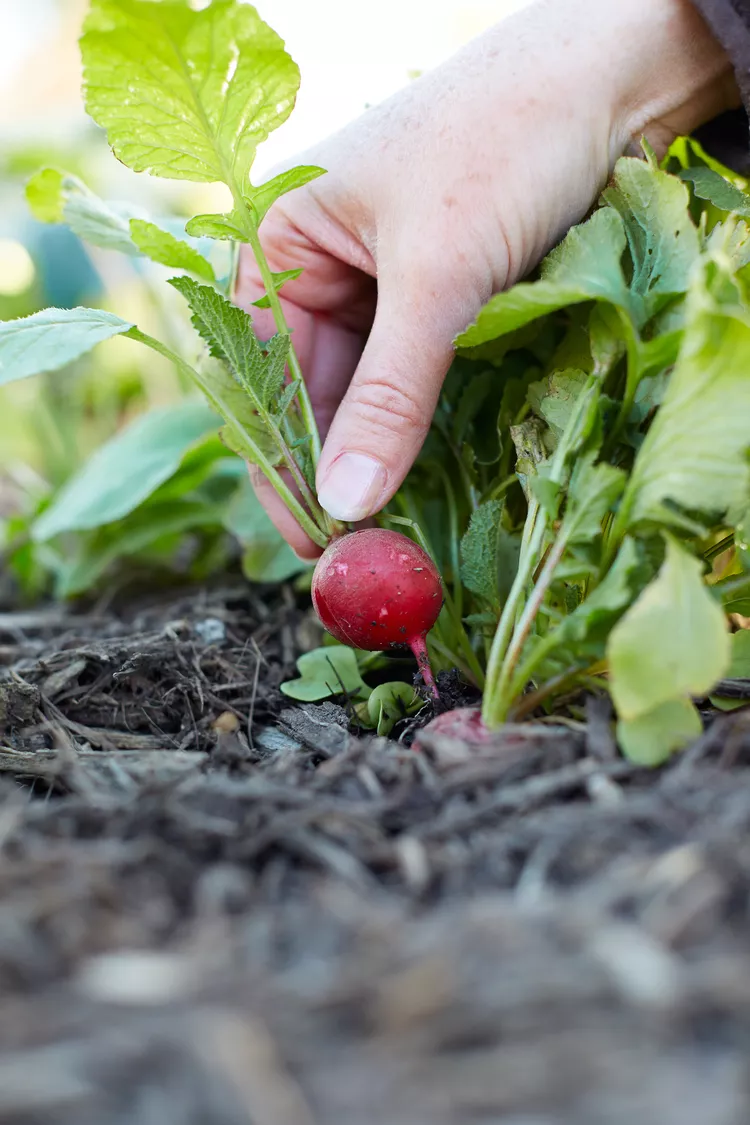
Growing radishes is an easy, beginner-friendly project. This root crop produces reliably, even if you’ve never grown vegetables before. Typically planted in spring and autumn, radishes grow best during cool weather. And they're fast-growing vegetables; most varieties are ready to harvest just 30 days after planting. Whether you want to grow breakfast radishes or hardy daikons, this guide will teach you how to plant and grow radishes so you can enjoy your own bountiful harvest.
Radish Overview
| Genus Name | Rhaphanus sativus |
| Common Name | Radish |
| Plant Type | Vegetable |
| Light | Sun |
| Height | 1 to 3 feet |
| Width | 1 to 2 feet |
| Flower Color | White |
| Foliage Color | Blue/Green |
| Zones | 10, 11, 2, 3, 4, 5, 6, 7, 8, 9 |
| Propagation | Seed |
Where to Plant Radishes
Radishes are easy-going plants that can be grown in in-ground gardens, raised beds, or containers as long as they receive plenty of sun and moisture. Raised beds and containers that are at least 6 inches deep will work for most radish varieties; however, daikons and other radishes with long tap roots need to be grown in beds or pots that are at least 2 feet deep.
Most gardeners grow radishes in narrow rows in their vegetable gardens, but radishes can also be interplanted with taller veggies, like beans and peas. Growing radishes among other crops is a smart way to maximize your garden space and radish roots can also be used to break up and aerate compact soils.
How and When to Plant Radishes
Cold tolerant radishes can be planted in early spring, as soon as the ground is workable. Most radishes will be ready to harvest a few weeks after planting, but you can extend your harvest by succession planting radish seeds every 7 to 10 days throughout spring. Because radishes bolt (start to flower) in heat rather than form thick roots, it’s best to stop planting radishes in summer, but you can sow an autumn crop of radish seeds in late summer to early fall, up to 4 weeks before your area's first frost date.
Before planting radishes, amend your soil with compost or aged manure and till your beds, if necessary, to loosen the soil up to a depth of 6-8 inches. Radishes grow best in fertile earth, but avoid adding too much nitrogen to your garden because this can cause radishes to grow an abundance of leaves and small roots.
When you’re ready to plant, directly sow radish seeds a half-inch deep in rows spaced 3 inches apart. Plant radish seeds about 1 inch from each other and then thin the radish seedlings out to 3 inches apart once the seedlings are about 2 inches tall. Thinned out seedlings can be used as microgreens to flavor salads, sandwiches and other dishes.
Radish Care Tips
Radish beds should be weeded often as low growing radishes have a hard time competing with vigorous weeds. It’s also important to follow proper spacing instructions when growing radishes as compact soil and overcrowded beds can limit the size of radish roots. To boost the size of your radish crop, be sure to follow the simple care tips below.
Light
Radishes grow best when they receive at least 6 to 8 hours of bright sunlight daily. Radishes can also grow in part shade, but the size of radish roots will diminish if plants don’t get enough light.
Soil and Water
Soil quality and consistent watering are key if you want to harvest radishes with rich flavor and delightfully crunchy roots. Like other root vegetables, radishes need loose, fertile, and well-draining soil that’s deep enough to support their vigorous roots. Make sure radishes receive about 1 inch of water per week. Underwatered radishes can become tough, woody, and overly pungent, while overwatered radishes can develop root rot.
Temperature
Radishes are tough plants that can handle a light frost or two, although they grow best when temperatures are between 40 to 70°F. During summer, it’s best to stop growing radishes since radishes bolt in heat. Once radishes bolt, their flavor changes and their roots can develop an unpleasant, woody texture.
Fertilizer
Radishes are light feeders and they generally don’t need to be fertilized as long as you amend your soil with compost prior to planting. If you do decide to fertilize radishes, select a low-nitrogen or balanced, organic fertilizer.
Harvesting and Storing
A common mistake among beginning vegetable gardeners is leaving radishes in the ground for too long, which results in tough and pithy roots. But you can avoid this by harvesting radishes regularly. Some springtime radishes can be harvested in just 30 days, while winter radishes may take 70 days or more to mature.
To determine when your radishes will be ready to harvest, check your seed packet for information about days to maturity and examine your radish crop carefully. Mature radish roots often show above the soil line, but you can also gently scrape the soil away from the top of the roots to see if they’re big enough to pick. Harvest radishes when the leaves are about 6 to 8 inches tall and the roots are about 1 inch in diameter.
To harvest radishes, carefully pull the plants up by their leaves using a gentle, twisting motion. Shake away the excess dirt, rinse and dry the radish roots, and trim off the radish greens. Radish roots will stay fresh in your crisper drawer for about 1 to 2 weeks, while the edible greens should be eaten within a few days.
Pest and Problems
Flea beetles
Flea beetles are tiny, black beetles that rapidly scuttle and jump away when disturbed. These insects primarily damage radish leaves and riddle them with holes. However, you can keep flea beetles in check with organic insecticidal soap sprays and companion planting with catnip, dill, and green onions.
Cabbage maggots
Cabbage maggots are the larvae of certain species of flies and they feast upon radishes and leave behind unsightly tunnels in radish roots. Rotating crops annually and installing cardboard “plant collars” over radish roots can help protect your plants from these voracious pests.
Types of Radishes
‘French Breakfast’
One of the most commonly grown radishes, ‘French Breakfast’ radishes are prized for their elongated, red and white roots. Crisp and flavorful, these radishes can be eaten fresh, but they’re even better sauteed in butter and served on toast with a poached egg.
‘Black Spanish’
‘Black Spanish’ radishes have a unique look with black skin and a creamy white interior. Spicy and intensely flavored, these winter radishes are ideal for autumn gardens and their firm skin means they store well in root cellars.
Daikon
Another popular radish option, daikons have long tap roots that need deep soil to grow. But these versatile radishes are must-haves if you love bahn mi sandwiches with quick pickled do chua.
Radish Companion Plants
Beans
Growing short radishes beneath vining legume plants such as pole beans puts empty garden soil to good use. In fact, you may be able to harvest a crop or two of radishes before your beans are ready to pick.
Cucumbers
Radishes fit easily beneath vining cucumber plants but radishes may also repulse squash bugs that feed on cucumber plants.
Carrots
Carrots and radishes have similar needs, so you know they’ll grow well together. But radishes also breakup tough soils and make it easier for carrot seeds to germinate.