
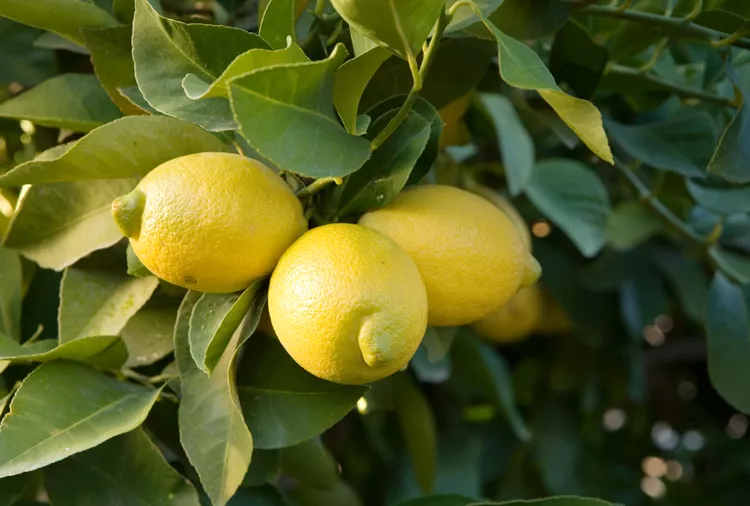
Knowing when and how to prune a lemon tree correctly will help you get the most out of your plant. Though most citrus trees grow slowly and rarely need pruning, lemon trees are unique. Known to grow vigorously—to the detriment of fruit production in some cases—lemon trees benefit from annual pruning. Regularly snipping away unproductive upright shoots along with deadwood keeps the tree in good health and productive. Plus, it will help you maintain your plant at a more convenient size for harvesting. Here are eight easy pruning tips to keep your tree in top shape and produce plenty of tart, vitamin-rich fruit.
Some lemon trees can have sharp thorns, and their sap can cause skin irritation. Always wear protective gloves and eyewear when pruning lemon trees.
1. Prune trees right after harvest.
The best time to prune a lemon tree is shortly after harvesting the fruit. A lemon tree's flower buds, the beginning of the next season's fruit, form quickly after the current fruit is harvested. Some lemon varieties ripen in late summer, while others are ready to harvest in winter or early spring.
2. Remove unhealthy wood.
Pests and diseases enter lemon trees through dead, damaged, and diseased branches. Remove these parts as soon as you see them to reduce pest and disease threats. An important task involving how to prune a lemon tree is to scan the tree for broken limbs after strong winds. Intense cold spells can damage branches, too. Cut back branches damaged by cold weather to healthy wood or wood with leaves. Branches riddled with insects and diseases are less common, but they should be cut back immediately to healthy wood.
3. Snip sprouts growing along the trunk.
Fast-growing shoots popping up along the trunk or a branch of a lemon tree are usually nonproductive water sprouts. When left on the tree, these vigorous stems grow into woody limbs that shade productive interior branches and rob valuable plant nutrients. When caught early, water sprouts can often be plucked off the trunk or branch by hand, while established water sprouts become woody and require hand pruners. Young lemon trees produce more sprouts than mature trees. Keep a young lemon tree sprout-free by removing these stems by hand about once a month.
4. Cut branches back to the collar.
When removing a limb from an overgrown lemon tree, cut the limb back to the slightly swollen area of tissue near the trunk. This swollen tissue is called the branch collar. When branches are cut off in the branch collar zone, the tree heals the wound quickly. Branches cut off right next to the trunk or branches left as stubs beyond the branch collar heal slowly, and there is a greater chance that tree diseases and pests can take hold. Always aim to cut at the branch collar.
5. How to prune a lemon tree using the 3-cut method on large branches.
Pruning a large branch requires multiple cuts to ensure safety for the gardener and the tree. Use the 3-cut pruning method for branches larger than 2 inches in diameter. The first cut is an undercut about 5 inches from the trunk or adjoining branch. Make the undercut about halfway through the branch. The second cut takes place a few inches beyond the undercut and removes the branch’s weight. Finally, the third cut removes the stump left. Cut off the stump to the branch collar—the swollen area of tissue where the branch attaches to the tree—cutting at a 45-degree angle.
Sterilize pruning tools with rubbing alcohol before pruning your lemon tree to avoid introducing plant diseases. Clean off your pruners again before pruning another citrus tree.
6. Protect newly exposed wood from sunburn.
Lemon trees are susceptible to sunburn after pruning. When a branch or a portion of the trunk is newly exposed to sunlight after pruning, protect it with white latex or another standard tree paint. Latex paint can be diluted 50% with water; do not use oil-based paint.
7. Prune at recommended times.
Small pruning cuts made annually right after harvesting lemons result in little or no loss of fruit the following year. Large pruning cuts, often necessary when a tree is overgrown and hasn’t been pruned for many years, can significantly reduce the quantity of fruit produced the following year. Prune annually and enjoy a regular harvest.
8. Aim for a dome-shaped tree.
When pruning a lemon tree for size and shape, make cuts to create a tree about 7 to 10 feet tall and 10 to 15 feet wide. A small tree is easier to harvest from the ground or with the help of a short ladder. Reduce the size of an overgrown tree by cutting branches back by about 10 to 12 inches each year for several years. This slow method of renovating an overgrown tree is healthier for the tree than cutting it back drastically all at once.