
Selecting plants that deer don't find appealing is the best strategy for minimizing browsing damage in your yard (other than constructing a 10-foot-tall fence around your property). The following deer-resistant shrubs fit that bill. Usually. Remember that if your hoofed visitors are hungry enough, they'll eat just about anything in your yard.
The plants that deer hate the most have less palatable features such as fragrant flowers, aromatic leaves, prickly leaves, fuzzy or hairy leaves, and sappy leaves and stems.
Arrowwood Viburnum
Deer don’t like most viburnums, but the one they are least fond of seems to be the arrowwood viburnum (Viburnum dentatum). This low-maintenance, multi-stemmed, native deer-resistant shrub bears flat white flower clusters in the spring with an unpleasant scent (at least to deer), followed by small, bluish-black fruit that squirrels and birds favor. Its fall leaf color varies from dull yellow to bright orange or red.
Growing Conditions: Full sun to part shade and average soil
Size: 6 to 10 feet tall and wide
Zones: 2-8
Bayberry
Although bayberry wax is used to scent candles, that fragrance is unattractive to deer. This shrub's glossy green leaves are usually deciduous but are semi-evergreen in the southern parts of its range. Use bayberry (Myrica pensylvanica) as a hedge plant, in a mixed shrub border, or a rain garden. If you want fruit to grow, include both male and female plants.
Growing Conditions: Full sun and dry to wet soils
Size: 5 to 10 feet tall and wide
Zones: 3-7
Boxwood
Boxwood (Buxus spp.) is an evergreen shrub with small oval leaves that have a distinct fragrance (some would say odor) and bitter flavor that deer do not like. Depending on the selection—there are over 70 species and hundreds of varieties—boxwood works well as a foundation plant, hedge, and for topiaries.
Growing Conditions: Full sun to part shade and well-drained, evenly moist soil
Size: 2 to 12 feet tall and wide (depending on variety)
Zones: 5-9
Butterfly Bush
As attractive as the butterfly bush (Buddleia spp.) is to butterflies and other pollinators (not to mention gardeners), its strong, sweet scent repels deer. This deciduous shrub produces long clusters of purple, pink, white, or yellow flowers throughout summer, flanked by attractive scented gray-green leaves. A long-blooming addition to a mixed border garden, varieties are available in a range of sizes.
Growing Conditions: Full sun and average soil
Size: 1-5 feet tall and wide (depending on variety)
Zones: 5-9
Because it can spread by seed to unwanted areas, butterfly bush is considered invasive in some parts of the country. Check if it’s safe to plant where you live. Better yet, look for varieties that produce minimal—or no—viable seed including: ‘Miss Molly’, ‘Miss Ruby’, and Miss Violet’; or ‘Pink Micro-Chip’ or ‘Purple Haze’ from the Lo and Behold Series.
Daphne
Daphne (Daphne spp.) is another deer-resistant shrub with a scent that humans consider lovely but is off-putting for Bambi and his ilk. Plus, all parts of this evergreen or semi-evergreen shrub are toxic. Daphne bears its fragrant blooms in late winter or early spring. Some selections sport attractively variegated leaves.
Growing Conditions: Part shade and moist, well-drained soil
Size: 1-4 feet tall and wide (depending on variety)
Zones: 5-9
Drooping Leucothoe
Drooping leucothoe (Leucothoe fontanesia) is a broadleaf evergreen shrub known as doghobble. Like daphne, all parts of this plant are poisonous, so deer usually give it wide berth. From spring to early summer, it produces attractive clusters of fragrant white bell-shaped flowers. It is well suited to growing in a moist woodland garden or along the bank of a stream. It also looks great in front of or between taller shrubs in a mixed border.
Growing Conditions: Part shade to sun and consistent moisture
Size: 2 to 6 feet tall and 4 to 8 feet wide
Zones: 4-6
Forsythia
The bright yellow flowers that cover the bare stems of this deciduous deer-resistant shrub in early spring provide a cheerful beginning to the growing season. However, forsythia is not attractive to deer, who don’t like the bitter flavor of the flowers and leaves. While not particularly showy, the leaves are a pleasing green backdrop for brightly colored annual and perennial flowers. In fall, the leaves may turn burgundy.
Growing Condition: Full sun to part shade and average soil moisture
Size: 3 to 8 feet tall and 4 to 12 feet wide (depending on variety)
Zones: 4 to 9
Fragrant Sumac
Native to the eastern United States, fragrant sumac (Rhus aromatica) spreads by root suckers to create a dense thicket. It attracts birds and butterflies so this deer-resistant shrub makes a good addition to wildlife or naturalized plantings. Its leaves and stems emit a strong scent when bruised, one that deer find unsavory. It often has spectacular red, yellow, and orange fall foliage color.
Growing Conditions: Full sun to part shade and average to dry soil
Size: 2 to 4 feet tall with a spread of 10 feet
Zones: 3-9
Juniper
There are more than 50 species and hundreds of varieties of juniper (Juniperus spp.), none of which are much favored by deer. They range in size and form from low-growing, wide-spreading groundcovers to upright deer-resistant shrubs and towering trees. Depending on the selection, juniper shrubs can be grown as a groundcover, foundation planting, screen, or hedge. They are also very useful for planting on a slope to prevent erosion. A few of the more popular types are the common juniper (Juniperus communis), shore juniper (J. conferta, shown here), creeping juniper (J. horizontalis), and Himalayan juniper (J. squamata).
Growing Conditions: Full sun to part shade and average soil
Size: variable, depending on type
Zones: 3-9
Lilac
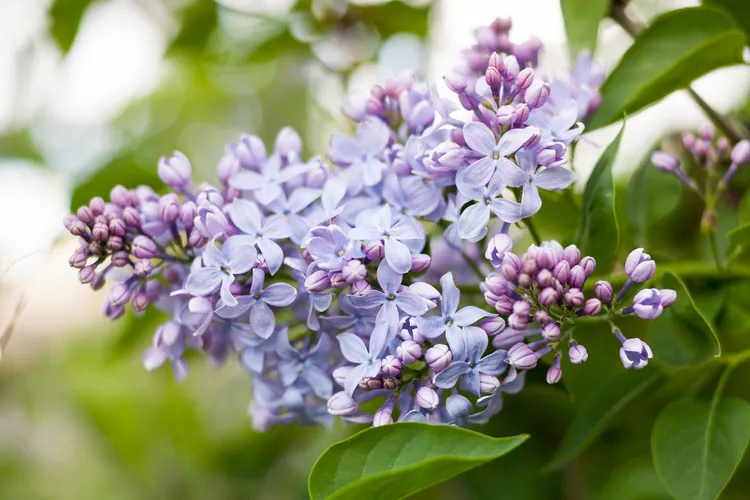
While humans love lilacs (Syringa spp.) for their clusters of sweetly scented spring flowers, the strong scent seems to repel deer. Lilacs are long-lived deer-resistant shrubs that are well-adapted to cool climates. Flower color ranges from purple or pink to white. Use these shrubs as a specimen, an addition to a border, or a loose hedge.
Growing Conditions: Full sun and moist, well-drained, neutral to alkaline soil
Size: 2-12+ feet (depending on variety)
Zones: 2-7
Weigela
Weigela (Weigela florida) is an old-fashioned deciduous shrub that blooms in spring and early summer. It has gained new popularity with some great varieties that sport flowers in shades of pink, red, yellow, and white. Its arching stems are flanked with glossy, oblong leaves that are typically medium green. Varieties with burgundy, deep purple, gold, chartreuse, or variegated foliage are available, adding to its seasonal interest. It is rarely bothered by deer or other pests, and once established, it is drought-tolerant.
Growing Conditions: Full sun to part shade and average soil moisture
Size: 2 to 10 feet tall and wide (depending on variety)
Zones: 4-9
More Deer-Resistant Plants
If you're looking for deer-resistant perennials to pair with your shrubs in a mixed border, catmint and foxglove are two plants to add to your garden. Deer-resistant annuals, including calendula and angelonia, will add tons of color to your backyard for the summer. Regionally, plant early-summer blooming lupine in the Pacific Northwest and fall-flowering chrysanthemum in the Southern states. Delicate columbine loves the shade, and deer stay away from its pretty flowers. Plan a deer-resistant garden to minimize the possibility of your flowers being gobbled up by hungry, doe-eyed friends.